Caregiver-Focused Platforms That Simplify Government Benefit Enrollment
Millions of caregivers miss billions in benefits due to bureaucratic complexity.
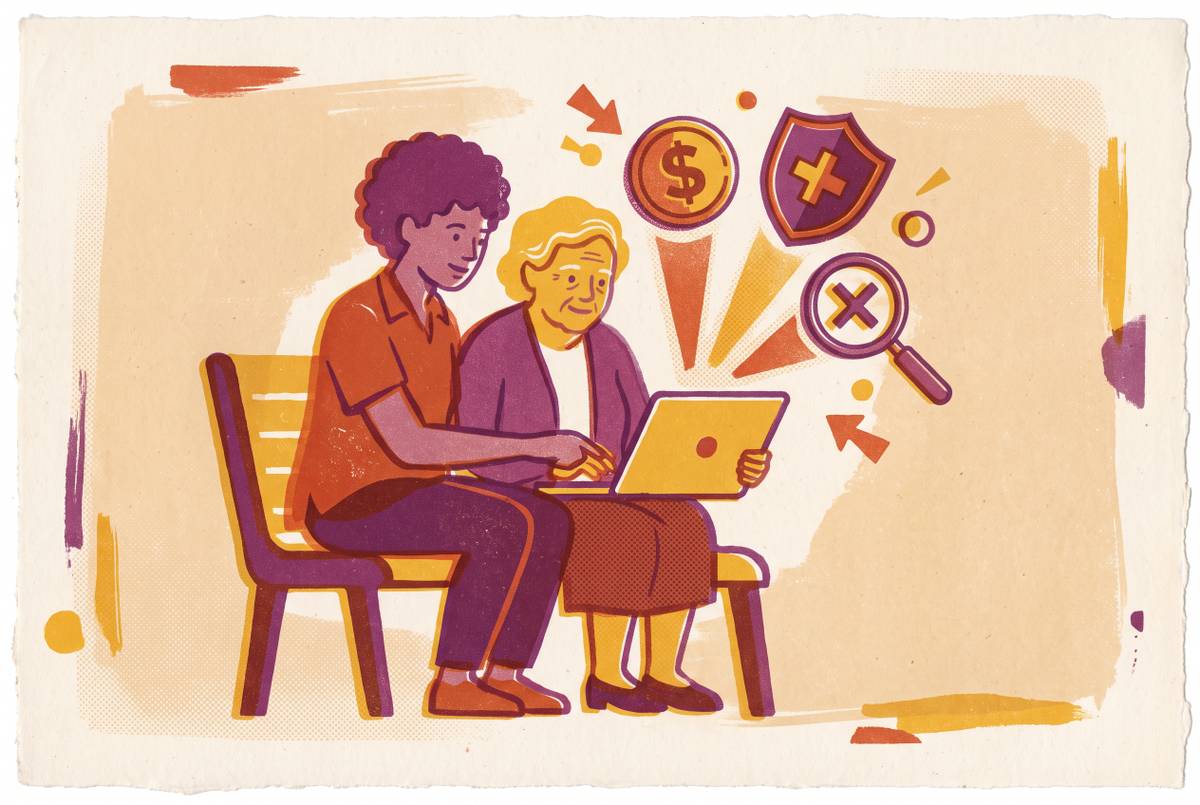
Nearly 63 million Americans provide unpaid care to a family member or friend, close to one in four adults. Most qualify for some government benefit: paid caregiving through Medicaid, a VA stipend, free home health coverage through Medicare. Almost none of them collect it. This piece looks at why that gap exists, which programs go unclaimed most, and how a newer set of caregiver-focused platforms is starting to close the distance between qualifying for something and actually getting it.
The scale matters before getting into mechanics. Caregivers delivered an estimated 49.5 billion hours of care in 2024, valued at $20.41 an hour, a total economic contribution north of $1 trillion. That is a shadow workforce doing work worth more than the total annual output of most countries, and most of it goes uncompensated for a reason that has nothing to do with the money not existing.
Why caregivers miss benefits they already qualify for
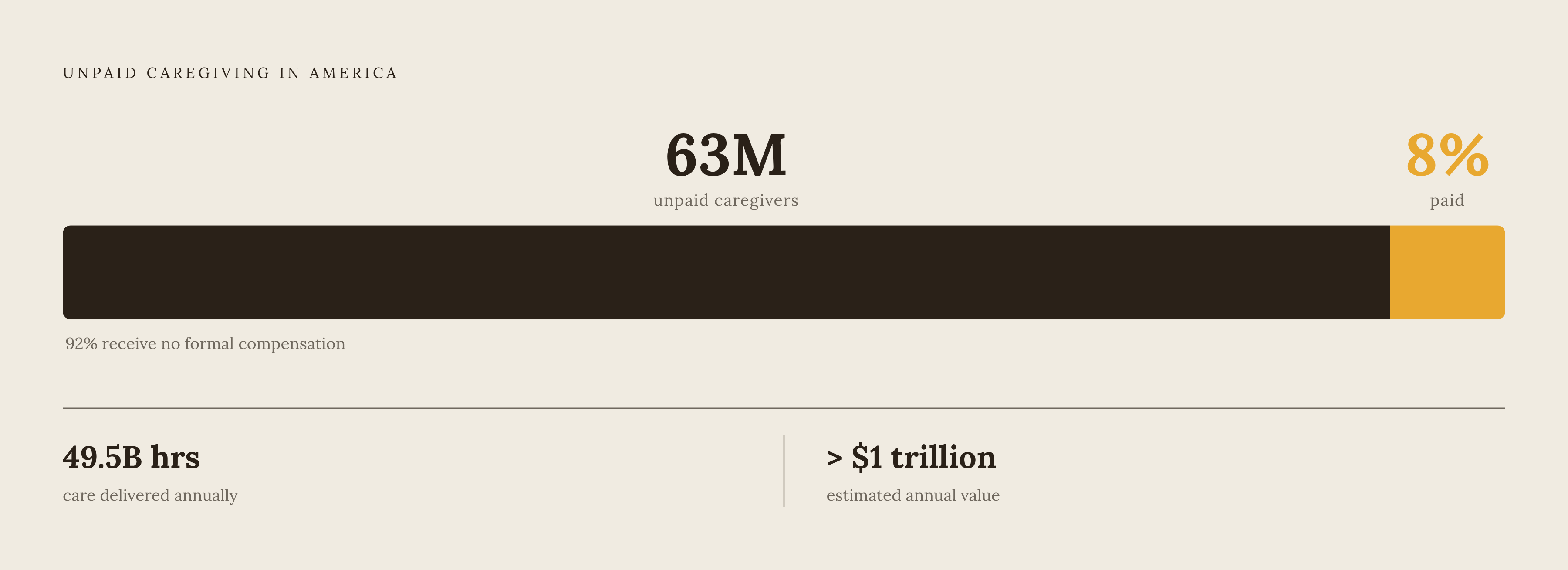
Just 8% of caregivers report getting paid through any formal channel, whether that is a personal care agreement, a self-directed Medicaid program, or a VA program. Pathways for compensation exist in nearly every state. That prompts asking why a group this large leaves that money on the table. It is why a group this large leaves it sitting on the table.
Blame the design of the system before blaming the caregiver. Less than a third of caregivers feel adequately supported by federal, state, or local government, hovering around 28 to 29% at every level, and two out of three Americans agree government is not doing enough for caregivers, a number that climbs past three-quarters among people caring for elderly relatives. Given how many programs exist against how few people enroll, this looks less like a shortage of benefits and more like a failure to make them findable.
Looking at who is actually doing this work makes the picture clearer. Seven in ten family caregivers hold a job on top of caregiving duties, and 18 million of them are hourly wage workers, the group with the least schedule flexibility and the least slack to spend an afternoon parsing Medicaid waiver rules. The average caregiver spends close to 23 hours a week on caregiving tasks, more than half of a full-time job stacked on an actual full-time job, leaving maybe a few scraps of time to research eligibility across eleven or more distinct program types, each with its own rules, its own state variation, its own paperwork. Something gives, and it is almost always the research.
The programs most caregivers don't know they can access
Medicaid Home and Community-Based Services (HCBS) is the largest source of paid family caregiving in the country. The care recipient generally needs to be Medicaid-eligible and require a level of care comparable to what a nursing home would provide. Nearly all 50 states offer some version, though waitlists are common, and applying early instead of waiting for a crisis matters more now than it used to: the One Big Beautiful Bill Act cuts roughly $1 trillion in federal Medicaid spending over the next decade, and waitlists tend to grow when funding tightens. National median pay for HCBS caregivers runs around $18 an hour, ranging from roughly $15 to $25 or more depending on state and program. A number of states also offer Structured Family Caregiving, a tax-free daily stipend that families should check for even after they think they have found the relevant program, because this one hides behind the more visible one.
The VA's Program of Comprehensive Assistance for Family Caregivers (PCAFC) pays monthly stipends that typically range from around $1,900 to $3,500 in 2025, depending on the caregiver's tier and location. A 10% stipend increase has been proposed but is not finalized, and any 2026 adjustment remains modest rather than a significant raise. The application is a procedural trap for anyone who has not read the fine print: both the veteran and the caregiver have to apply together using VA Form 10-10CG, a joint requirement that catches families off guard because nothing in the program's name suggests it. Separately, VA Aid & Attendance is a pension benefit rather than a caregiver stipend, paying up to $2,874 a month for a married veteran, and it gets missed constantly because it sits in a different corner of the VA system, one families don't think to check.
Medicare home health deserves the most attention here, because it is the most consequential benefit hiding in plain sight. The standard Part B premium rises to $202.90 a month in 2026, up from $185, with an annual deductible of $283, so costs are climbing for caregiving households generally. But home health itself is covered at zero cost when the care recipient is homebound and meets Medicare's criteria. That is the free benefit caregivers walk past because nobody tells them to look for it. PACE, the Program of All-Inclusive Care for the Elderly, belongs in the same category: one of the most comprehensive benefits available and one of the least used, now operating in 33 states as of 2026.
Tax and income supports round out the picture. The Dependent Care FSA contribution limit rose to $7,500 in 2026, up from $5,000, giving working caregivers a meaningfully larger pre-tax cushion. The Credit for Caring Act, reintroduced in March 2025, would create a nonrefundable tax credit of up to $5,000, covering 30% of qualified long-term care expenses above $2,000 a year, though it has not become law and its status beyond introduction remains unconfirmed. SNAP eligibility extends further than most people assume too: a single-person household qualifies at 130% of the federal poverty line, and plenty of Medicare recipients who would qualify never apply.
What caregiver platforms do differently from a government website
A government benefits portal is built around one program at a time. Looking up Medicaid HCBS tells you about Medicaid HCBS. It will not mention that the same household might also qualify for VA Aid & Attendance, or that the local PACE program could replace three separate services at once. That is the structural limit: government sites present eligibility in isolation, program by program, state by state, because that is how the underlying agencies are organized. Caregivers do not live inside that structure. They live in a single household with one set of medical and financial facts that happens to intersect with a dozen different bureaucracies at once.
Caregiver-focused platforms exist to collapse that fragmentation into a single screening experience. It helps to split what they do into three separate jobs, since not every platform performs all three. Discovery means surfacing programs a caregiver has never heard of. Eligibility screening means asking a targeted set of questions that filters the full universe of programs down to the handful a specific family can actually use. Guided enrollment means walking someone through the paperwork: which forms, in what order, submitted where.
Some platforms are fully automated screeners. Others pair automation with a human coach who picks up the phone. Some arrive through an employer as a workplace benefit; others are built around a single condition or program rather than the whole landscape. Each of these models serves its own purpose better than the others in specific situations. They solve different problems for different households. Matching the platform to the situation, covered in the final section, matters more than grabbing whichever one ranks first in a search result.
Timing adds real weight to all of this. With HCBS waitlists likely to lengthen as the One Big Beautiful Bill Act's Medicaid cuts take effect, the gap between knowing a program exists and actually applying to it could mean months of delay for a family that needed paid care yesterday, not next spring.
Platforms that centralize benefit discovery and eligibility screening
NCOA's BenefitsCheckUp® casts the widest net available, and it is free. Run by a national aging services organization, it screens across more than 2,000 public and private benefit programs spanning all 50 states and the nation's capital. Caregivers helping an older adult apply for Extra Help, the federal program that lowers Medicare Part D drug costs, can submit that application electronically through the site and get immediate confirmation from the federal agency processing it. A network of 100 community-based Benefits Enrollment Centers backs the tool, and starting February 1, 2026 and running through August 31, 2028, a newly contracted National Benefits Helpline and Screening Service, combining a toll-free line with online chat, aims to close the geographic gaps a purely digital tool cannot reach on its own. Brevy, a free government healthcare benefits enrollment service, is another option for caregivers who want eligibility screening paired with live specialist support. Anyone who wants the broadest possible scan without worrying about cost should start here.
BenefitsUSA.org takes a narrower, more caregiver-specific approach. Its free screener covers key government benefit programs inside one interface, paired with guides updated for 2026 that explain each program rather than just spitting out a referral list. Anyone who wants context alongside the eligibility check, not just a name and a link, tends to get more out of this one.
LTCareNav is built around a narrower question: how does a caregiver actually get paid? It maps 11 distinct paid caregiving pathways with figures verified for 2026, and its finder tool filters by state and program type. It names the policy environment directly, flagging the One Big Beautiful Bill Act and its Medicaid cuts, and advises applying early rather than waiting. That is dated, practical guidance, not something that could have been written five years ago unchanged. This is the tool for someone chasing compensation specifically, not the full universe of benefits.
These three win on discovery and screening. What they generally do not do is walk a caregiver all the way through the paperwork. The next category picks up there.
Platforms that pair guided enrollment with human expertise
Passion to Care operates in just two states, Indiana and Georgia, and that narrowness is the point. It is a human-guided service that takes a family from initial assessment through Medicaid waiver approval and on to the first paycheck, specializing in Structured Family Caregiving and Medicaid waiver enrollment. Reported compensation for eligible caregivers reaches up to $560 a week in Georgia and up to $800 a week in Indiana. With more than five years inside these two specific state programs, the service trades geographic reach for depth, which matters for families who need someone to own the process instead of just pointing them toward a form and wishing them luck.
Cariloop takes a different shape entirely: an employer-sponsored benefit rather than something a caregiver signs up for directly. Families get paired with a dedicated professional who helps build a caregiving plan, search for specialists or facilities, and work through financial and legal questions. A secure portal supports the care coordination process in one place. In November 2025 the care navigation platform Grayce began formally referring all of its own clients to Cariloop, a sign of consolidation around a smaller number of established players. This only works if an employer offers it, though, and the 18 million hourly caregivers with the least flexibility to navigate bureaucracy on their own are often the same workers least likely to find it sitting in their benefits package.
A few AI-assisted tools solve a different problem. Caring Village's Caregiver App includes an AI assistant named Julia alongside a medication list, document storage, a wellness journal, a shared calendar, and messaging, replacing the scattered spreadsheets and group texts families default to otherwise. Call it a coordination tool rather than an enrollment engine: it clears out the cognitive clutter competing for the same mental bandwidth caregivers would otherwise spend on benefit research. eHealth introduced an AI voice agent named Alice in April 2025, initially focused on Medicare plan shopping before adding broader customer service functions. eHealth describes moving toward a continuous "lifelong guidance" model rather than a one-time enrollment interaction, though that shift applies specifically to Medicare plan navigation, not benefit discovery in the wider sense.
A free benefits navigation service focused on government healthcare programs sits closer to the centralized end of this spectrum. It screens eligibility across Medicaid HCBS, VA programs, Medicare home health, and other caregiver-specific pathways through a single intake, then combines automated triage with live specialist support to walk families through actual enrollment. One intake covering multiple program types instead of a dozen separate lookups is exactly the fragmentation-collapsing the earlier section on government portals argues caregivers need.
How to match your situation to the right platform
No single platform covers the entire landscape. Chasing the "best" one in the abstract wastes time that could go toward figuring out what is most urgent right now. Someone who wants the widest possible scan at no cost should start with NCOA's BenefitsCheckUp or BenefitsUSA.org. Someone trying specifically to get paid as a caregiver should start with LTCareNav's 11-pathway finder, then move to a state-specific service like Passion to Care if they are in Indiana or Georgia and ready for hands-on waiver enrollment.
A caregiver whose loved one is homebound and on Medicare should check home health eligibility directly. That benefit runs at zero cost and remains one of the most underused entry points into the entire system, largely because nobody advertises it. Anyone currently employed should check whether their employer already offers a caregiver navigation benefit before paying for something similar out of pocket. Families dealing specifically with dementia should look for a provider participating in CMS's GUIDE Model, a federal initiative built around dementia care coordination, and can lean on a tool like BenefitsCheckUp to surface adjacent programs worth applying for at the same time.
Timing carries more weight than it used to. With HCBS waitlists positioned to grow as the One Big Beautiful Bill Act's roughly $911 billion in cuts phase in, starting the screening process now, before a care crisis forces the issue, is the one move in this entire piece a caregiver can act on today.
None of this reflects a personal failure on the caregiver's part. Only 8% currently get paid through programs built for exactly this purpose, and less than a third feel government support is adequate at any level. The gap sits in the system's design.