Why Caregiver-Serving Organizations Are Outsourcing Medicaid Enrollment to Automation Platforms
Automation platforms help understaffed organizations navigate fragmented state Medicaid rules.
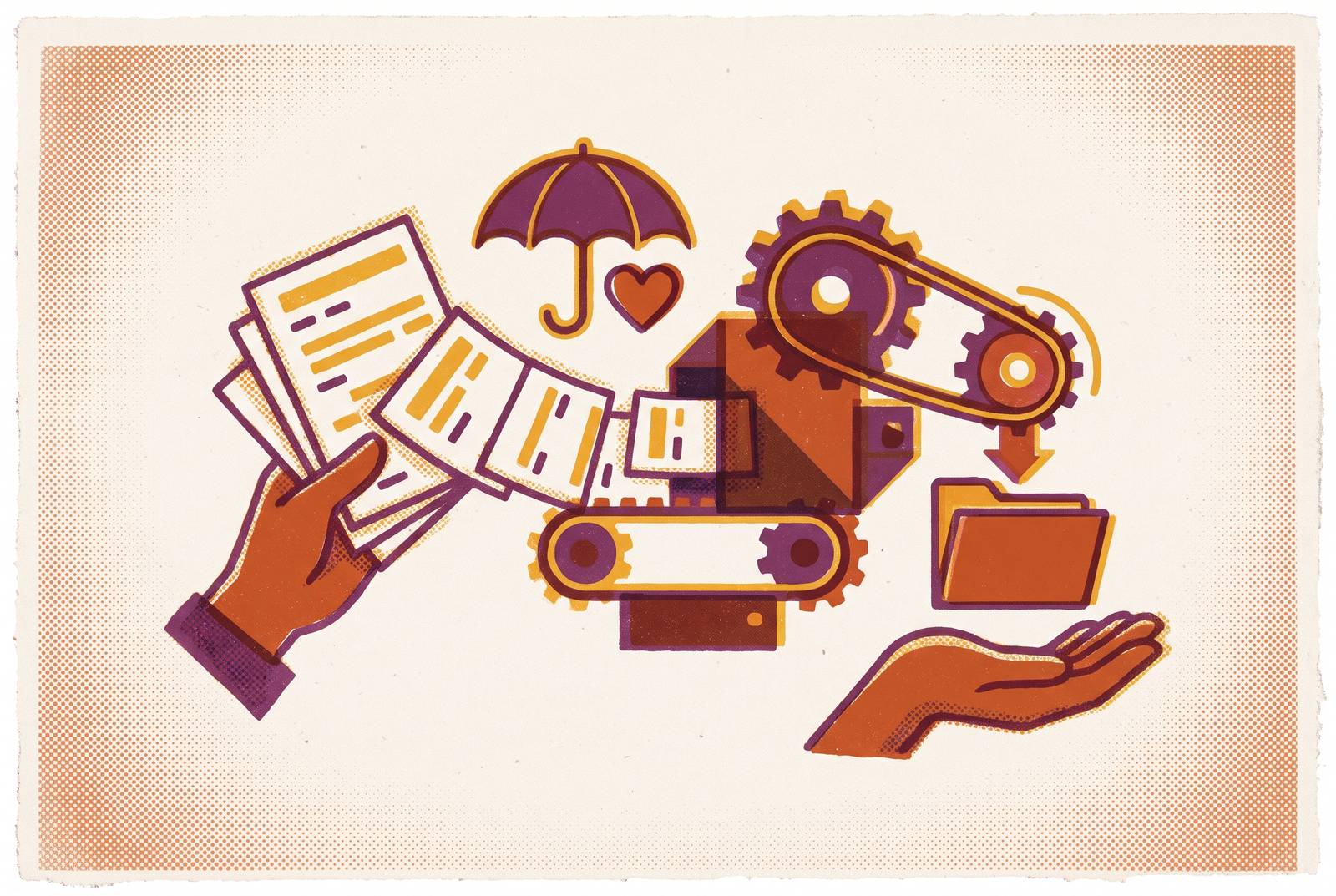
End-to-end Medicaid enrollment automation for family caregivers handles eligibility screening, outreach, document collection, case follow-through, and renewal tracking. Caregiver-serving organizations are turning to these platforms because state-by-state rules and new federal requirements have pushed manual navigation beyond sustainable staffing. Effective automation does more than fill forms. It connects families to the programs they qualify for and guides them through enrollment without making technology another barrier.
Why Medicaid enrollment has become impossible to staff through
Georgia Pathways illustrates why enrollment problems cannot be solved simply by adding counselors. Its implementation challenges included both documentation requirements and technology system updates. Those are two different kinds of obstruction. Staff can help a family gather documents, but that assistance alone cannot resolve limitations in the state system receiving them. The case exposes a broader problem in which enrollment depends on a family completing an application and several systems working together.
State fragmentation makes that coordination harder for organizations operating across borders. Michigan uses CHAMPS, Illinois uses IMPACT, Florida uses FLMMIS through AHCA, and California Medi-Cal uses PAVE. Each brings different documentation standards and workflows. A multi-state organization must navigate incompatible portals while preserving the knowledge needed to move each case forward. More staff can distribute the work, but hiring does not remove the need to master each system separately.
Nearly all states let Medicaid enrollees self-direct home care, and most pay family caregivers, though the rules differ by state. Yet availability is not the same as access. Among dually eligible beneficiaries receiving personal care, the share enrolled in self-direction ranges from a fraction of a percent to nearly universal across states. That variation is not explained by preference alone, but also by whether families hear about the programs and can navigate entry.
How the One Big Beautiful Bill Act turned a hard problem into a crisis
The legislation, enacted in 2025, increased the administrative workload for organizations already managing this fragmentation. Work requirements make documentation a recurring condition of coverage, with projected losses among adults with disabilities arising from missed paperwork even when they remain eligible. The distinction is central to enrollment operations. A person may still qualify for assistance while failing to complete the process needed to retain it. Perenna Health, a Medicaid Coverage Navigation Platform launched in Indiana in July 2026, built its product premise around that risk.
Biannual reassessments also turn every current enrollee into a recurring re-enrollment case. The workload no longer comes mainly from new applicants. Doubling or more the ongoing administrative throughput needed to maintain existing caseloads changes what an enrollment team must handle before it can expand access. CMS recognized how hard the new community engagement requirements would be to put in place when ten health technology companies that already had state Medicaid eligibility and enrollment contracts freely pledged to help. That response places administrative capacity at the center of implementation.
Cedar’s January 2026 analysis describes what the increase looked like inside a regional health system in the Northeast. The system had deployed Medicaid enrollment automation in December 2024, before the law passed. Application volume subsequently rose more than fourfold after enactment. Automation absorbed that increase without additional staff. For a manual operation, a surge of that scale would require far more than a modest adjustment to workloads, especially while existing cases still needed attention.
What the enrollment burden actually costs caregiver organizations and the families they serve
Caregiver organizations must manage these demands in a workforce where annual turnover reaches roughly three-quarters to four-fifths of staff. When experienced employees leave, their understanding of state-specific documents, portals, and procedures leaves with them. A staffing solution must account for replacement and training as well as the number of open cases. Otherwise, a larger team can still depend on a shrinking pool of people who understand the difficult workflows.
For families, the cost is not confined to administrative inconvenience. A majority of unpaid caregivers report being financially overwhelmed by caregiving costs. Aeroflow Urology’s 2026 “Caregivers in Crisis” survey found that more than half had reduced their work hours to care for a loved one. Where a caregiver qualifies for compensation but cannot complete enrollment, the gap between eligibility and access becomes income the household cannot use.
The burden also has a psychological dimension. Clinicians who work with family caregivers have found that trouble finding a way through the system is often the main reason caregivers seek mental health support, ahead of caregiving tasks, problems in relationships, and stress at work. What, then, counts as an efficient enrollment process? Measuring only how quickly staff handle forms would miss how much work families take on and how much they are left unsure about. The case for automation rests partly on reducing that transferred burden, rather than merely moving it into a digital interface.
How does software handle the Medicaid enrollment process from start to finish?
Effective automation begins by identifying an enrollment need before it becomes a coverage or billing crisis. Cedar describes systems that check for Medicaid eligibility during pre-registration, before an appointment. They flag lapsed coverage or self-pay patients who may qualify. Timing changes the conversation with the patient. Instead of beginning after a bill arrives, assistance can begin while there is still an opportunity to address coverage earlier.
Outreach then has to reach the person concerned. Cedar describes text, email, and calls as channels that reach different patients, with automation running them simultaneously. Document collection is a separate operational hurdle. Perenna collects documents through secure SMS workflows and tracks cases until they are complete, including those of patients whom traditional outreach did not reach. Coordinating those tasks across a caseload provides value.
Platforms can monitor timelines from state Medicaid agencies or managed care organizations and flag patients before coverage expires. Cedar quotes one Medicaid patient navigating the changes saying, “I don't think there are enough times that I could be reminded of updating my information”. Reminders therefore serve a continuing need. Perenna’s self-updating worklists also surface patients at risk under the new work requirements, turning changing case information into ongoing follow-through at volumes that manual lists cannot sustainably support.
These functions handle the repeated screening, contact, collection, and tracking tasks that take up staff time across thousands of cases at once, while judgment remains necessary. That distinction also defines the limits of “end-to-end”. The software can support a case through completion, but the term should not imply that a platform controls state eligibility decisions or removes every program-specific requirement.
How organizations in the field have deployed automation and what happened
The AI-native home care startup operates as a Medicaid provider and equips family caregivers with professional training, certification, and RN care manager support. Its model extends beyond application assistance. It brings caregivers into a formal care arrangement supported by operational technology, rather than treating enrollment as an isolated transaction.
Access to a formal caregiver program can connect a family not only to payment, but also to training and professional support. The finding shows why investment in the path into supported care deserves consideration beyond the administrative cost of processing an application, though it does not isolate automation as the cause of fewer hospitalizations.
The Northeast health system in Cedar’s analysis presents a different use case. Capacity increased without additional staff. Keeping those distinctions clear prevents unlike deployments from becoming a single, unsupported claim about what automation achieves.
Tennessee Medicaid shows how technology is used in home and community-based programs, which is a separate use from enrollment automation. Its technology solutions included tablets, medication dispensers, and smart home devices. Their use was associated with fewer emergency department visits and skilled nursing stays among members. That association concerns the infrastructure supporting care after access is established. It helps explain why the path into services is only one part of a broader technology-supported care system.
The real limits of automation and where the equity risk lives
Automation can still exclude the people it is intended to reach. Low connectivity, limited resources, and distrust do not disappear when paperwork becomes digital. The Elevance Health Public Policy Institute’s May 2026 survey of unpaid caregivers supporting Medicaid beneficiaries found that a majority of technology users experienced technical errors. More than half struggled with physical requirements such as storage space and internet connection, while roughly half faced challenges with upkeep. A workflow can be efficient for the organization and difficult for the caregiver.
HHAeXchange’s 2025 survey of thousands of caregivers found rising comfort with technology, particularly for scheduling and communication. Enrollment asks for a different kind of participation. Sharing financial and personal documents requires trust that a scheduling interaction may not test. The enrollment process needs to make its purpose clear and its demands manageable even for caregivers who already use technology.
CMS raised equity risks at the November 2025 Medicaid Community Engagement Verification Solutions Tech Demo Days, hosted by CHCS and MIC in coordination with the agency. Most showcased companies incorporated AI as a core component. CMS recognized the promise for streamlining administrative processes while noting risks when equity is not designed in from the start. Georgia Pathways adds a related constraint. Automation within an organization cannot on its own fix the combined problems of limits in state technology and the trouble families have with paperwork.
The Administration for Community Living’s February 2026 Caregiver AI Prize Competition shows that the agency sees a need for better tools. Its prize money went to multiple winners for tools meant to help the home care workforce get more done and ease the load on caregivers. The design question remains specific. Can a platform accommodate the people most likely to disengage, rather than optimizing only for those already able to finish an online process?
What separates enrollment automation that works from automation that adds a new layer of friction
Trust, clarity, and follow-through distinguish useful enrollment support from faster form processing. Cedar identifies these as foundational requirements because patients may mistake an outreach message for a collections call or fail to understand why financial documents are being requested. Either problem can stop a case before document collection begins.
Secure SMS-based workflows that do not require app downloads or portal logins reduce technical demands of the kind identified in the Elevance survey. Channel choice is equally important to access. Text and email can reach some families, while calls remain necessary for others. A digital-only platform may simplify the organization’s workflow while reproducing the same exclusion that prompted the search for better enrollment support.
Screening and tracking distinguish a continuing service from a one-time outreach tool. Real-time eligibility screening integrated into pre-registration, post-visit, and claim-denial workflows creates several opportunities to identify someone who may qualify. Continuous case tracking then connects identification to completion and renewal. These functions answer different operational questions. Screening establishes who may need help, while tracking keeps an unfinished case or approaching renewal from disappearing from view.
For family caregivers, that workflow must also understand the program being sought. An AI assistant that identifies qualifying programs and guides enrollment needs state-by-state rules for paid caregiver programs and self-directed Medicaid services alongside federal eligibility criteria. Perenna’s documented role is to help people navigate coverage through secure document collection and case tracking, while Cedar’s examples show how health systems screen patients and reach out to them. Abby Care represents a provider model that combines family caregiver participation with training and care management, rather than an interchangeable enrollment software option. The practical test for end-to-end Medicaid enrollment automation is whether it connects the right program to a reachable, understandable path through completion, without leaving the family to navigate the gaps between those steps.