platforms that help family caregivers enroll in Medicaid and Medicare payment programs
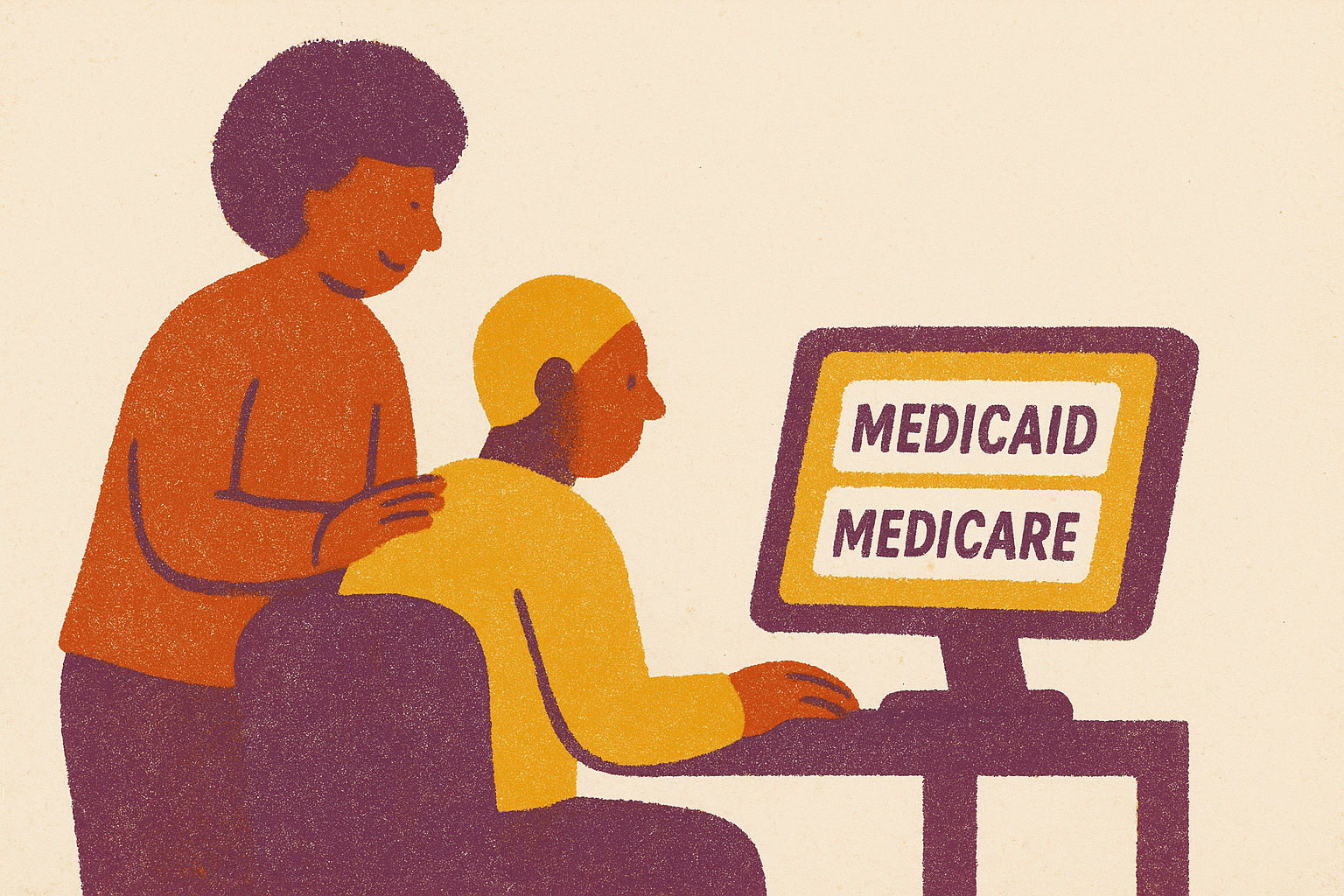
About 63 million Americans are providing unpaid care to a relative or friend right now, and most of them have no idea that Medicaid, in one form or another, will actually cut them a check for it. That gap between what's authorized on paper and who actually claims it drives everything below. A crop of enrollment platforms has shown up specifically to close that gap, and before you hand one your family's paperwork, you should know how they actually work, and where they still fall short.
Start with the money, since money is usually what makes people angry once they understand it. Family caregivers spend close to $7,200 of their own cash per year on care-related costs, per the National Alliance for Caregiving and AARP's 2025 Caregiving in the U.S. report. Some stop saving for retirement, rack up credit card debt, or leave jobs outright, and set that against what professional in-home care runs, about $5,720 a month in 2024, and you start to see why unpaid family labor has quietly become the default fix for a cost problem nobody in Washington or a state capitol has actually solved. Here's the part that should bother you more than it seems to bother anyone in charge: the money to pay these caregivers is frequently already sitting there, authorized, inside state Medicaid programs, waiting on applications that never get filed because nobody told the family they qualified.
Why does that happen? Fifty separate state Medicaid programs, dozens of waiver types, and a pile of federal authorities that share no common front door, that's why. Program names differ by state, sometimes by county within a state, and eligibility shifts depending on your zip code. There's no single website, no unified phone number, just agency portals, PDF forms, and phone trees built for callers who already know exactly what they're looking for. Billions in authorized Medicaid dollars go unclaimed every year for one plain reason: nobody built the bridge between the benefit and the person who qualifies for it.
The Medicaid programs that actually pay family caregivers
People assume Medicaid only covers nursing homes and hospital stays, so it tends to surprise them that paying family caregivers directly is standard practice, not some fringe pilot program. A 2025 KFF survey of state Medicaid officials found that every responding state pays family caregivers through at least one Medicaid home care program, and 49 states let enrollees self-direct their home care in at least some circumstances. That's close to universal on paper. The mechanism, though, varies enormously state to state, and this is where things get complicated fast.
Four federal authorities make this possible. The HCBS State Plan Option, 1915(i), lets states build home and community-based services into their regular Medicaid plan. The Community First Choice Option, 1915(k), works differently: it's a state plan entitlement rather than a capped waiver, so there's no enrollment waitlist for people who meet the criteria. That changes the calculus for a family deciding whether applying is even worth the effort. Then there's the Self-Directed Personal Assistance Services option, 1915(j), and the workhorse of the group, HCBS waivers under 1915(c), the most commonly used vehicle and also the one that comes with enrollment caps and, often, waitlists running years long.
Self-direction is where families get real control. Per that same KFF survey, 41 states let participants set their caregiver's pay rate, and 39 states let them decide how Medicaid dollars get spread across authorized services. In practice, that changes who becomes the employer of record inside the household. It's a bigger shift than the phrase "self-direction" makes it sound.
Two payment models come up again and again. Personal Care Services, PCS, pays caregivers taxable hourly wages for help with activities of daily living: bathing, dressing, mobility. Structured Family Caregiving, SFC, works differently. It's a tax-free daily stipend, available when the caregiver and the person receiving care share a home, and it exists in 13 states, though it almost never goes by that name on a state website. Massachusetts calls it Adult Foster Care, Connecticut calls it Adult Family Living, Pennsylvania has CarePlus, and Louisiana calls it Monitored In-Home Caregiving. Four states, four names, one underlying structure, and that alone tells you most of what you need to know about why families get lost trying to google this.
Adult children remain the most common paid caregivers, but spouse payment has opened up considerably; more than 30 states now allow it, a real shift from a decade ago. Income eligibility for the care recipient ranges from $914 to $2,742 a month as of 2024 depending on the state, which is exactly why a generic national eligibility number is close to useless to any one family. Then there's the waitlist problem: when a waiver's slots fill up, applicants wait months, sometimes years, and some states prioritize by application date while others prioritize by assessed need. It's a real barrier, and one that doesn't get talked about nearly enough.
What Medicare covers (and what it doesn't) for family caregivers
Original Medicare, Parts A and B, covers skilled home health services delivered by professionals. It does not pay wages to family members handling day-to-day care. People confuse this constantly, and the confusion costs real time, because they go hunting for a Medicare payment pathway for hands-on family caregiving that simply does not exist.
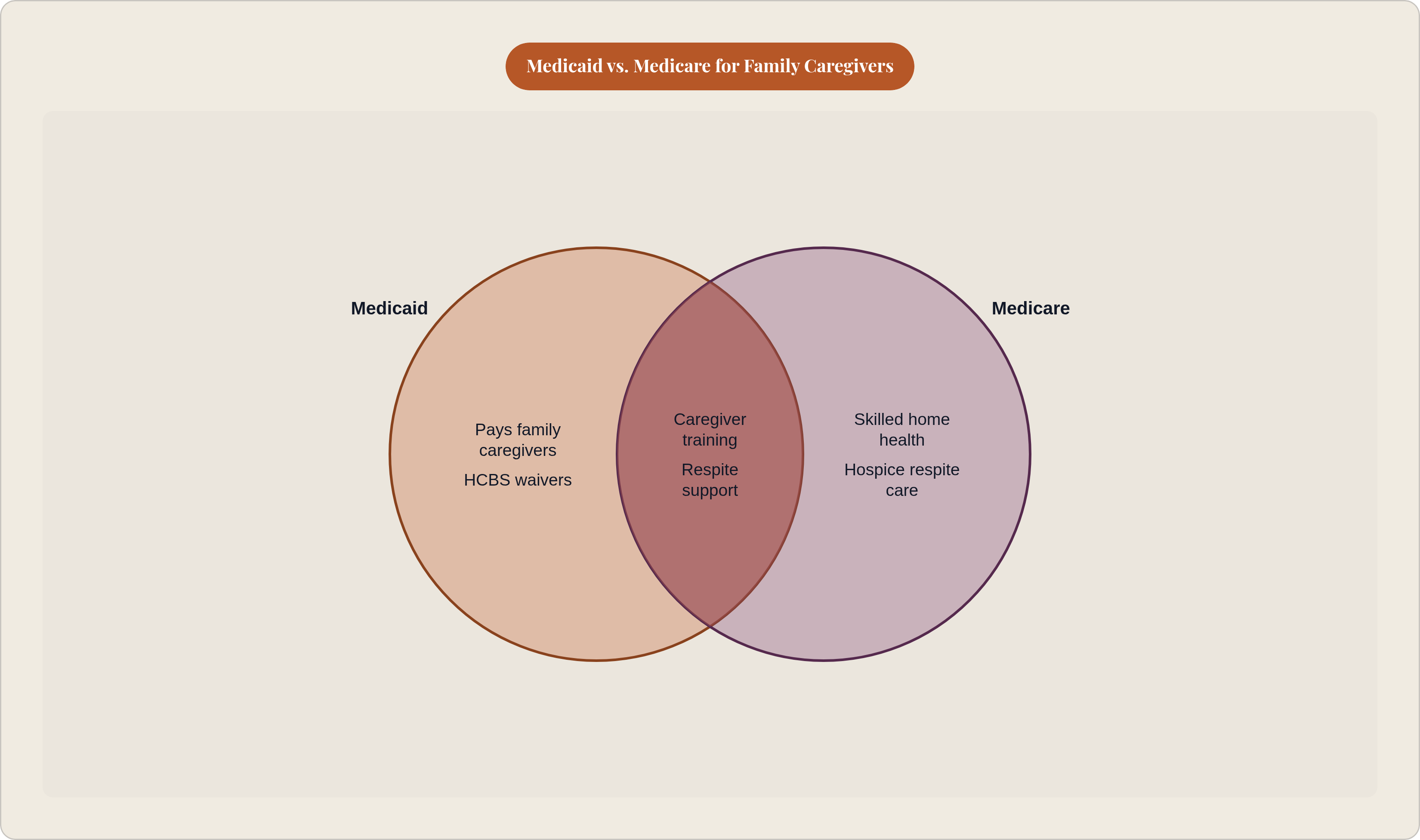
What Medicare does offer is narrower, though not nothing. Starting in 2024, providers can bill Medicare for time spent training family caregivers on wound care, medical equipment, and medication management, though the payment goes to the provider, not the family member doing the learning. The hospice benefit covers respite care, giving family caregivers a break while a substitute steps in. Some Medicare Advantage plans include supplemental caregiver support benefits original Medicare skips entirely, though coverage varies by plan and by geography, so check rather than assume yours does.
The most interesting development is the Medicare GUIDE Model, Guiding an Improved Dementia Experience, launched by the CMS Innovation Center in July 2024 and running through 2032. It funds care coordination and up to 80 hours of respite care per year for dementia caregivers, paid to providers rather than families directly, and it includes a 24/7 care navigator plus structured caregiver training. GUIDE signals where Medicare might be headed even though it isn't there yet. Recognition of the caregiver's role is growing, even as direct payment to caregivers stays outside the model. A 2023 Commonwealth Fund poll found more than 70% of family caregivers of Medicare beneficiaries said in-home and social service benefits would help them. Demand clearly outpaces what's on offer, and it isn't close.
Medicaid is the primary vehicle for actually paying family caregivers; Medicare functions more as a training and respite resource. Families rarely sort neatly into one system or the other, which is exactly why a platform trying to serve caregivers well has to understand both, not just the one that writes the checks.
How enrollment platforms are structured and what they actually do
Three distinct types of platforms operate in this space, and people conflate them constantly. Eligibility and enrollment platforms figure out which programs a caregiver qualifies for, then either guide them through the application or manage it outright. Structured Family Caregiving agencies are licensed Medicaid providers that enroll caregivers into SFC programs specifically, supplying the daily check-in tools and compliance paperwork that keep those payments flowing. Fiscal intermediaries, sometimes called Financial Management Services Agencies or FMSAs, administer the budget once a family is already enrolled in a self-directed program: payroll, tax withholding, state compliance reporting.
These functions overlap more than the clean categories suggest. Some SFC agencies also act as the FMSA for their own program, and some eligibility tools stretch into managed enrollment support instead of stopping at a screening result. The lines blur, and honestly, that blur is part of why families shopping for help end up confused before they've filed a single form.
So what do these platforms actually do, day to day? Eligibility screening comes first, matching income, functional needs, and location against state-specific criteria and program availability. Then there's the paperwork itself: gathering documentation and liaising with state Medicaid agencies, which in some states still means faxing forms to an office that genuinely uses a fax machine in 2025. Caregiver credentialing matters in states that require it, turning a family member into a certified Medicaid provider before a single dollar moves. Ongoing compliance, care logs, daily check-ins, timesheets, functions as the proof of work Medicaid demands to keep payments coming. For FMSAs specifically, payroll and tax handling means processing wages and issuing the right forms, W-2s or 1099s depending on the arrangement.
Think about what a caregiver navigating this alone actually has to do: find the correct program among a dozen possible options, complete state-specific paperwork that assumes prior familiarity with Medicaid terminology, meet credentialing rules that vary by state, and keep up ongoing documentation, all while actually providing the care in question. That's an enormous administrative load stacked on top of labor that's already exhausting on its own.
The platforms doing this work today
Careforth has built its business specifically around Structured Family Caregiving. As of mid-2026, it operates in Connecticut, Georgia, Indiana, Louisiana, Massachusetts, North Carolina, Ohio, Rhode Island, and South Dakota, and it's NCQA-accredited for its SFC program, with over 25 years in the field. Careforth publishes its clinical outcomes rather than leaning on marketing copy alone: in partnership with ATI Advisory, it reports participants show 45% lower probability of falls and 21% lower probability of emergency department visits compared to a comparable group of dual-eligible beneficiaries. On the payer side, Careforth cites $60,000 in annual savings per participant compared to nursing facility placement, with an average program length of stay exceeding three years. Careforth's own user data shows 91% of caregivers on its app find it easy to use, and the company expanded its Ohio program in October 2025 to include older adults and adults with physical disabilities.
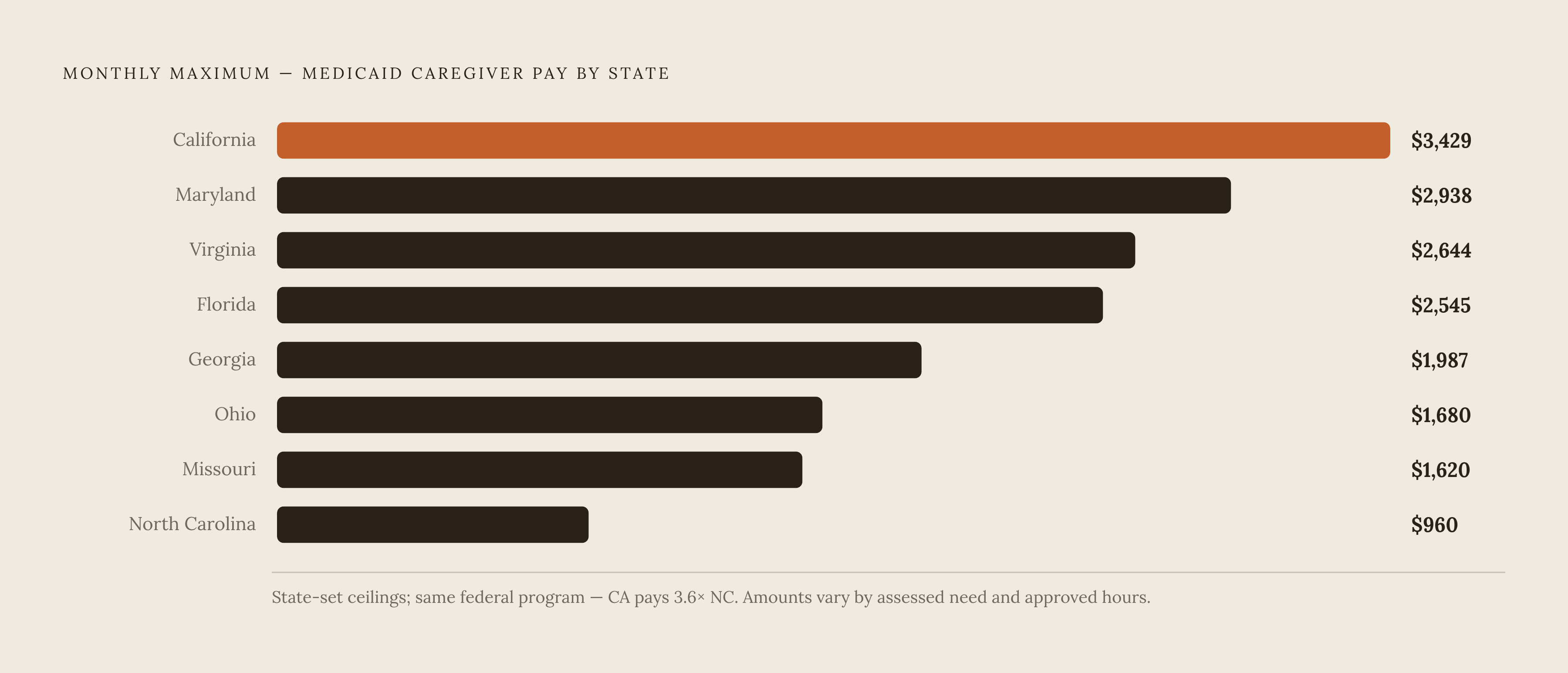
Givers takes a different entry point: a free, interactive eligibility tool matched to a caregiver's zip code, covering SFC and other Medicaid pay programs across multiple states. When a family qualifies for a program Givers serves, the company handles the enrollment administration itself, and in some states it operates as the licensed SFC agency directly. Its mobile app captures daily care notes as documented proof of work, which matters come compliance review. Givers reports 93% caregiver satisfaction and publishes state-specific monthly maximums that give families a sense of scale: up to $3,429 a month in California, $2,938 in Maryland, $2,644 in Virginia, $2,545 in Florida, $1,987 in Georgia, $1,680 in Ohio, $1,620 in Missouri, and $960 in North Carolina.
Public Partnerships LLC, PPL, is one of the largest fiscal intermediaries operating in self-directed Medicaid programs nationally. PPL partners directly with states to administer self-direction budgets, handling payroll, tax compliance, and back-end FMSA functions for families already enrolled. PPL doesn't touch eligibility and enrollment; its role starts after a family has already found its way into a self-directed program, which is precisely the gap eligibility platforms exist to close.
Brevy comes at the problem from the AI angle. It's an AI-powered assistant and enrollment support platform built specifically for family caregivers and seniors, and it works by surfacing, almost instantly, which Medicare, Medicaid, and caregiver compensation programs a user actually qualifies for, then walking them through enrollment. What sets Brevy apart is pairing that AI-driven discovery layer with human enrollment support, which addresses two separate failures at once: most caregivers don't know these programs exist, and even the ones who do often can't get through the application alone. Brevy is free to use, and the company reports enrolling thousands of families into benefits they were already eligible for but had never found on their own.
None of this happens in a vacuum. State-run Aging and Disability Resource Centers, Area Agencies on Aging, and nonprofit navigators have done this work for years, and the platforms above largely work alongside those institutions rather than trying to replace them.
What to look for when choosing a platform
Start with the most basic filter: does the platform actually serve your state? SFC agencies are licensed state by state, so a platform authorized to operate in Ohio may have zero presence in Texas. Self-direction rules, program types, and income thresholds vary enough that a platform without deep state-specific knowledge will struggle to give you an accurate answer, no matter how polished its website looks.
Next, figure out what stage of the process you're actually stuck at. If you haven't applied yet and genuinely don't know what you qualify for, an eligibility and enrollment platform like Brevy or Givers is the right starting point. If you already know you're eligible for SFC and need a licensed agency to formally enroll you and support the ongoing paperwork, that's the domain of SFC providers like Careforth, or Givers in the states where it holds that license. If you're already enrolled in a self-directed program and just need someone to handle payroll and tax compliance, that's a fiscal intermediary's job, which is where PPL fits.
There's a third filter people tend to skip: what kind of relationship does the platform offer after enrollment? Some hand you off once the paperwork clears, while others stay engaged, offering coaching, care logging tools, and ongoing compliance support for as long as you're in the program. For SFC specifically, this matters a great deal, since Medicaid requires continuous documentation to keep payments coming, and a platform with weak compliance tools can put your benefit at risk months down the line, often without you realizing it until a check doesn't show up.
A few questions are worth asking out loud, to an actual person, before you sign anything. Is the eligibility screening specific to your state, or is it a generic national estimate dressed up to look precise? Does the platform complete the application on your behalf, or point you toward a form and wish you luck? Are there fees, and if so, when do they start and how much are they? If the program you qualify for has a waitlist, does the platform know enough about alternative pathways to suggest one, or does the conversation just end there? And in states requiring caregiver credentialing, does the platform walk you through it, or leave you to figure it out alone?
One thing deserves real suspicion: platforms leading with maximum monthly pay figures without explaining that those numbers are state-set ceilings tied to the care recipient's assessed needs and approved hours. Actual pay almost always lands below the advertised maximum. A platform that skips that detail is picking a good headline over an honest expectation, and you're allowed to hold that against it.
Why this platform category is growing and where it's headed
The demand behind this category is structural, not a temporary spike. Roughly 5.1 million Medicaid enrollees already use home care, and Medicaid paid for two-thirds of home care spending in the U.S. in 2023, per KFF. An aging population means both numbers climb from here, not fall. A 2025 peer-reviewed study using 2021 Medicaid claims data found that over half of dually eligible beneficiaries 65 and older receiving personal care use self-direction, which tells you self-direction has moved from exception to something close to the norm. That shift multiplies the administrative need these platforms fill, since self-direction only works well when someone is handling the paperwork underneath it.
Numbers only tell part of it, though. Per the 2025 AARP report, over 8 million family caregivers rely on Medicaid as their own health insurance. That's a population with the most to gain from enrollment support and, often, the least time to go chasing it. Managing your own health on a Medicaid budget while caregiving unpaid leaves little room to go hunting for a compensation program on top of it; there's genuinely no time left in the day for one more form.
Policy is moving in a favorable direction, if slowly. The Medicare GUIDE Model, expanded billing for caregiver training starting in 2024, and the growing number of states permitting spouse payment all point toward greater institutional recognition of what family caregivers actually do. But each new program authorized is, from the platform's vantage point, one more benefit that needs identifying and one more application that needs filing. More recognition, in the near term, tends to mean more fragmentation, at least until someone builds the connective tissue between the program and the person who qualifies for it.
That's the opening for tools like Brevy, which doesn't just match caregivers to today's known programs but tracks policy changes and newly authorized benefits across all 50 states close to real time, closer than any one caregiver searching alone could ever manage. Whether AI-driven matching becomes the dominant model here or just one layer among several is genuinely an open question, worth watching as states keep adjusting their waiver structures and payment rules over the next few years.
Waitlists don't shrink while a family sits there trying to figure out where to even start.