Why Aging Adults Are Letting AI Handle the Role the Caseworker Used to Play in Consumer Directed Services
AI navigators are filling the gaps overstretched caseworkers leave behind.
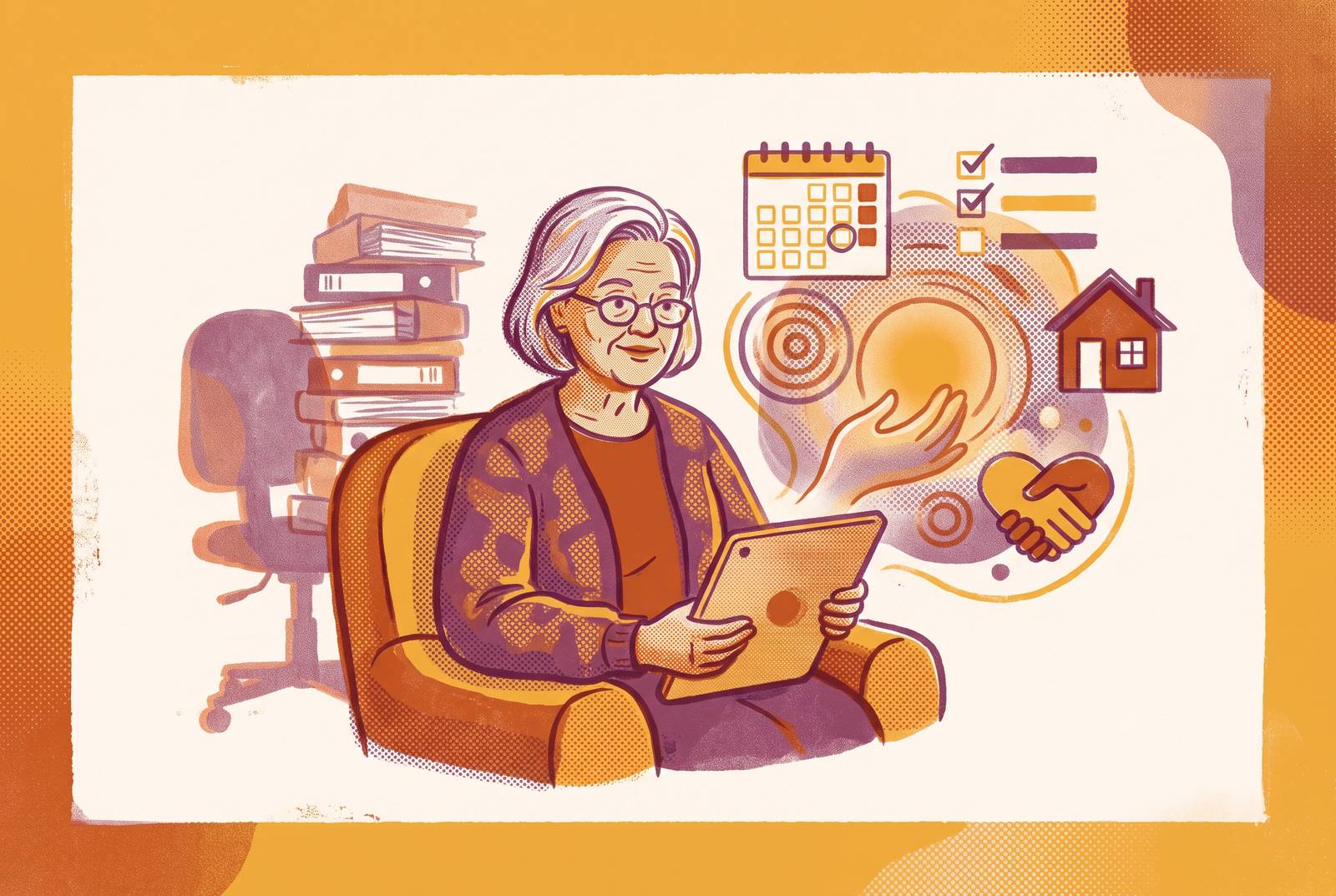
AI platforms can help family caregivers find Medicaid self-direction programs, understand eligibility, and work toward paid caregiving, but families need guidance based on their state’s current rules and help from people who can guide enrollment. In Consumer Directed Services, these tools are filling gaps left by overstretched caseworkers rather than simply satisfying a preference for automation. Their value depends on how well they help professionals reach more people while leaving those professionals to make the judgments.
Why the caseworker role in Consumer Directed Services is eroding
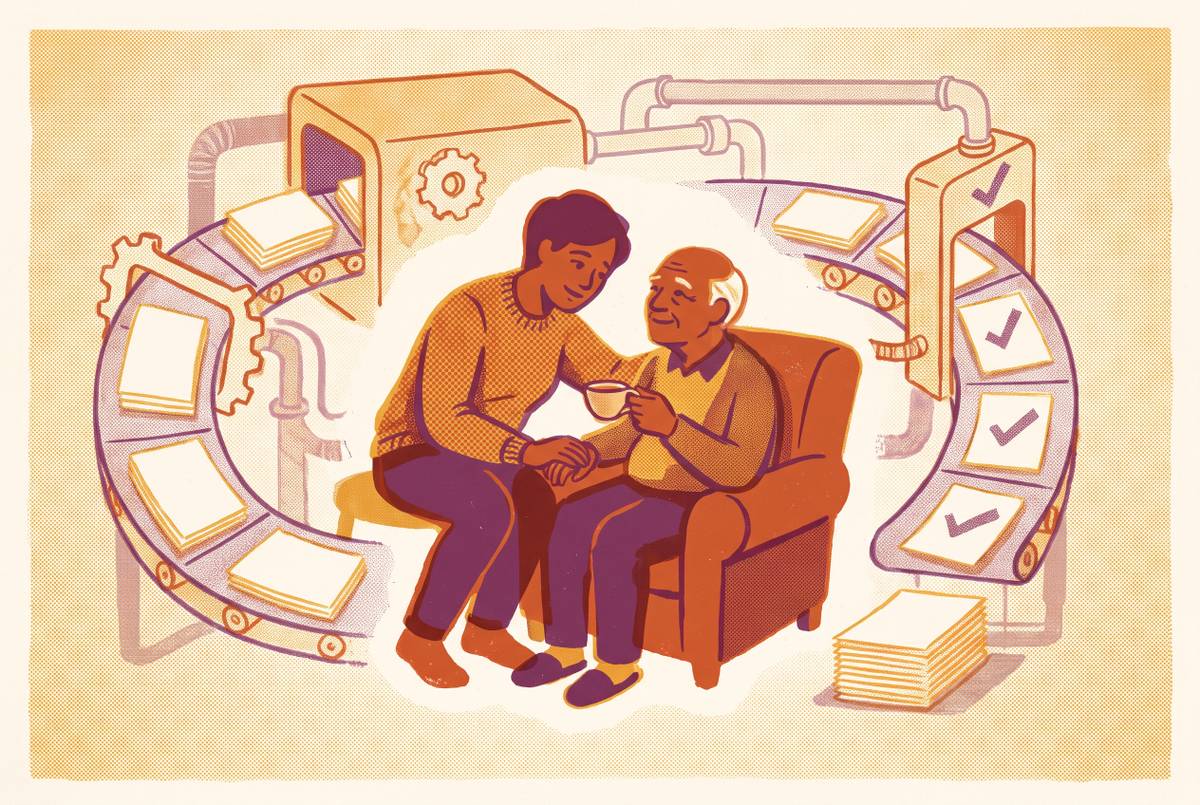
The support broker or caseworker explains eligibility rules, helps people apply, and checks that they follow the rules in Consumer Directed Services, or CDS. That role makes self-direction usable. Medicaid recipients can hire, train, and supervise their own workers, including eligible family members, but exercising that authority requires understanding the program. When the person who explains those obligations becomes hard to reach, the participant gains responsibility without dependable guidance.
Burnout and turnover are weakening that connection. Caseworkers cycle out faster than agencies can train replacements, while documentation consumes time that could otherwise go toward helping families. Under financial pressure, agencies look to documentation work as one of the few costs they can try to reduce quickly. The role does not formally disappear, but access becomes slow and uneven. For a family waiting to understand an application requirement, an unavailable caseworker offers little more help than an unfilled position.
The demographic and workforce math that makes the shortage permanent
More people need care, while the care workforce struggles to replace workers who leave. The home care industry already faces hundreds of thousands of openings each year from turnover and retirement, before new demand is added. Those openings show the wider staffing pressure surrounding CDS, where navigation depends on a functioning care workforce as well as available administrative support.
Why not wait for recruitment to catch up? That assumes agencies face a temporary hiring delay rather than a growing mismatch between resources and need. A rapidly aging population adds demand to organizations already trying to replace lost capacity. Recruiting more staff remains different from providing dependable help to a family that needs to enroll now. The distinction is between a workforce goal and an accessible service.
For families, the practical timeline is much shorter. An application can take months before a caregiver receives a first paycheck, and unresolved questions can extend that interval. Waiting for staffing to recover does nothing now to resolve a missing document or an eligibility rule a family has misunderstood. AI navigation is being developed to address this durable service gap.
What the caseworker actually did — and what families lose when that role empties out
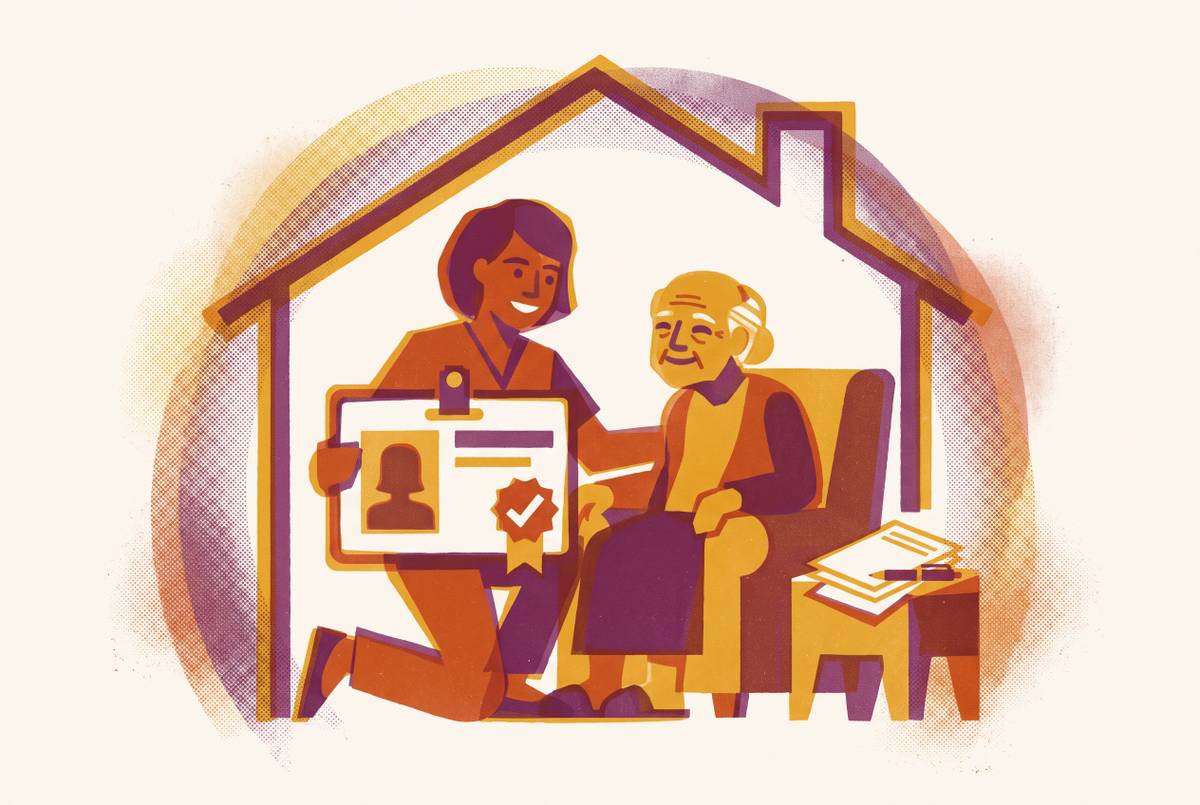
A family asking how to get paid to care for an elderly parent first needs to identify the right funding pathway. Medicare and Medicaid are not interchangeable here. Payment for caregiving instead comes through Medicaid, VA benefits, state programs, or private arrangements. A caseworker helps separate those routes before the family invests time in the wrong application.
Within Medicaid, eligibility itself has more than one dimension. To get help through a home- and community-based services waiver or similar program, a person must meet both the financial limits and the requirements of a functional care assessment. Program navigation adds another layer, with routes including Structured Family Caregiving stipends, California’s IHSS, and New York’s CDPAP. Other supports, including VA Aid & Attendance, state paid family leave, and the Dependent Care FSA, have distinct requirements.
The caseworker also connects understanding to completed enrollment. A missed document or misread rule can delay or derail an application, while reporting duties continue after approval. Benefits Data Trust, a 20-year nonprofit serving seven states, shut down in 2024, removing navigation capacity that health systems and states had relied on. That loss extends beyond any individual agency. Code for America’s reporting puts unclaimed government benefits in the billions annually, with tens of billions in SNAP and EITC alone.
How AI tools are being deployed to cover these specific caseworker functions
Waymark Compass launched in June 2026 as an SMS-based AI care navigator for Medicaid patients. It requires no app or login. Available in dozens of languages covering the vast majority of languages spoken by Medicaid patients, it helps with benefits and community resources while Waymark physicians supervise clinical interactions. It takes on part of a caseworker’s work by explaining benefits and helping people find their way through a channel they know, while leaving eligibility decisions to others.
Pyx Health rolled out an AI-powered navigator in late 2025 to help members manage complicated processes, including Medicaid and SNAP work requirements. It also helps members keep their eligibility when policies change. Oklahoma Medicaid’s chatbot addresses eligibility, benefits, and program information, with the stated goal of reducing waits and freeing staff for complex needs.
Washington State’s Medicaid companion device serves eligible beneficiaries receiving in-home long-term services and supports through daily check-ins, wellness support, and help with routines. Those functions support independent living, but are distinct from determining whether a family caregiver can be paid. In a related federal direction, CMS Administrator Dr. Mehmet Oz announced in March 2026 that the agency planned AI agents to help Medicare beneficiaries find doctors and health plans. Across these examples, the relevant design thread is low-barrier access, understandable information, current program data, and professional supervision where decisions become clinical or high-stakes.
What the research says about how aging adults actually engage with these tools
MIT AgeLab studies presented at GSA 2025 examined family caregivers’ use of and trust in AI, as well as adults aged 85 and older’s perceptions and use of AI for managing aging. They found age-related differences in willingness and in how information-seeking behavior shapes adoption. The findings suggest that a tool’s availability alone says little about who will use it or benefit from it.
Gul Seckin’s December 2025 editorial in Frontiers in Public Health identifies digital health literacy, perceived value, and usability as key determinants of engagement. It also identifies digital exclusion and underrepresentation in training datasets as risks. Oz acknowledged at HIMSS in March 2026 that many Medicare enrollees do not yet trust AI tools. A service must earn people’s trust while making itself easy to use.
What does that require beyond a simpler interface? Waymark’s SMS design avoids requiring an app or login, while Washington’s device brings support into the home. Neither example establishes that all older adults prefer that format. Shu-Ching Chen’s February 2026 editorial in the Journal of Nursing Research notes that WHO stresses the need to improve digital systems and help older adults use them. The implication is active support through familiar channels, with human oversight visible to the user, rather than expecting people to acquire new platform skills before receiving help.
The administrative burden AI can genuinely reduce for caregivers and workers
Enrollment is only the beginning of the administrative load. Participants and workers must continue documenting and reporting what their programs require, while caseworkers help interpret those obligations. The ACL’s April 2026 expert brief from the National Council on Aging’s Direct Care Workforce Strategies Center draws on what direct support professionals in Alaska, Hawaii, and Maryland have to say. Its survey identifies health monitoring and care coordination as leading areas of potential, with AI used as an assistive tool under clear safeguards.
Ian Kow, a Direct Support Professional and CDS provider in Hilo, Hawaii with 7.5 years in the field, describes that boundary directly. “I see real potential for AI in documentation, planning, and communication, especially if it's used as an assistive tool, with clear safeguards, not as a replacement for human judgment or relationships.” Chen’s editorial also discusses research on ways caregivers can keep watch more efficiently without having to supervise all the time. Medication reminders, bed-exit alarms, anomaly detection, and voice interfaces can reduce reactive work. Caregivers retain responsibility as their workload eases.
CBT-based conversational tools such as Woebot and Wysa have peer-reviewed support as supplements for mild-to-moderate stress and anxiety. A November 2026 study in npj Mental Health Research found that AI could spot changes in how dementia caregivers expressed their feelings and connected with other people. It did not establish reductions in clinical loneliness, depression, or burnout. Identifying emerging distress can prompt connection to support, but detection is not treatment.
Where AI fails and why accuracy in state-specific Medicaid rules is non-negotiable
Vals AI’s June 2026 report found that general-purpose AI models got answers to SNAP-related questions wrong nearly a quarter of the time. That finding raises a serious concern for CDS navigation, because Medicaid self-direction rules vary by state, waiver type, and program year. A fluent explanation cannot compensate for using the wrong rule.
A family may need to understand waiver qualification, financial and functional thresholds, worker eligibility, state-specific pay rates, and documentation requirements. An error at any one point can undermine otherwise useful guidance. If a tool confidently misreads a government notice, it can turn uncertainty into misplaced confidence, exposing a family to missed enrollment opportunities or lost benefits. Reliability must therefore be assessed at the level of the applicable program.
The ACL brief calls for safeguards around high-stakes judgment. Link Health’s experience likewise points toward enrollment technology tethered to trained navigators who explain information at the user’s literacy level and in their native language. Human support is not an incidental extra. For families evaluating a tool, the lesson is to look for current, state-specific program data and escalation when a question exceeds the system’s reliable range. Those are requirements for design and supervision.
What a functional AI-plus-human model for CDS navigation actually looks like
A workable division of labor gives AI the repeatable work of surfacing programs, explaining requirements, and supporting compliance tracking. Trained people handle complex interpretation and high-stakes exceptions. Waymark puts part of this model into practice with SMS navigation and physicians who oversee clinical interactions. The LA County / Imagine LA pilot puts another part into practice by using AI to help 500 case managers serve thousands of beneficiaries. In both examples, people can use an automated answer without treating it as the final decision on eligibility.
For a family choosing a service, that division becomes a set of practical questions. Is the tool built on current Medicaid rules for the relevant state and program? Can it escalate a difficult question to a trained human, and is that transition clear? Is it accessible without a new app or login, and does it explain answers in plain language? These criteria are more useful than a general claim that a platform “uses AI,” because they describe the help a family can actually reach.
A platform combining AI-powered eligibility screening with human enrollment support fits this need when it helps match families to Medicaid self-direction, VA benefits, state paid caregiver programs, or tax benefits and then guides the application. Discovery alone is not completed enrollment. Nor does help with one pathway establish expertise in every other pathway. The strongest model preserves those distinctions while reducing the repetitive work that consumes scarce navigator time.
Khalil, Ahmad, and Ali emphasize ethical safeguards, privacy protections, and transparent decision-making in agentic AI for elderly care. Those requirements belong within the service. The practical goal is to extend the reach of available professionals without hiding where their judgment is still needed. For a family, success means more than getting an answer quickly. It means being able to choose and direct care while understanding the obligations that make that choice possible.
Sources
- Redefining Elderly Care with Agentic AI: Challenges and Opportunities
- Empowering Caregivers With Smart Care Artificial Intelligence
- Artificial Intelligence in the Longevity Economy: What Do We Know?
- Beyond the algorithm-Expert insights on AI and the care ...
- Editorial: AI-driven healthcare delivery, ageism, and implications for older adults: emerging trends and challenges in public health
- AAA WORKFORCE CHALLENGES AND THEIR IMPACT ON OLDER ADULTS: RESULTS FROM A NATIONAL POLL AND AGENCY INTERVIEWS
- Medicaid’s Home Care Support for Family Caregivers in 2025
- Chapter 5: Self-Direction for Home- and Community-Based Services