How to Start a Conversation About Care Needs
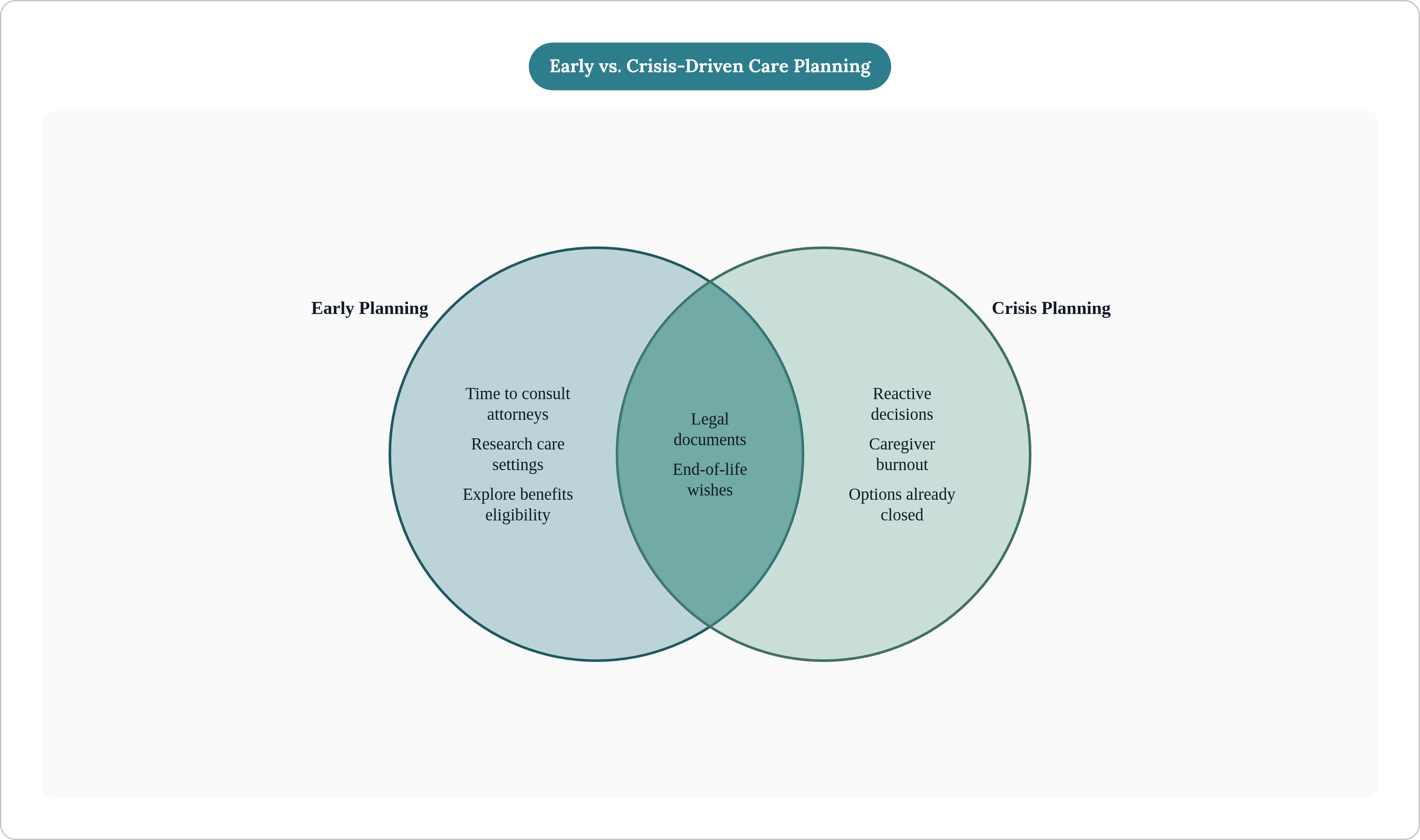
Starting these conversations early lets families plan together instead of reacting in crisis.

The silence is not indifference. Fewer than half of adult children have discussed end-of-life issues with aging parents, according to research published in PMC, and the reasons are emotionally coherent even when they are practically costly.
I have watched this play out more times than I can count, and the pattern is recognizable. The adult child who has noticed the unopened mail accumulating on the counter, the parent who stopped mentioning doctor appointments, the refrigerator visited on a weekend that contained almost nothing. Everyone sees it. Nobody says anything. Not because they don't care, but because saying something makes it real.
For adult children, initiating this conversation means confronting a parent's mortality directly, often for the first time in any sustained way. That confrontation is not something most people seek out voluntarily. For the parent, the stakes feel different but equally high: acknowledging health or safety concerns can feel like surrendering the autonomy that has defined adult life for decades. Amy McLoughlin, a senior living expert at A Place for Mom, has observed this pattern consistently. The resistance manifests as denial, she notes, even when the need is plainly visible to everyone else in the room.
Research on advance care planning adds another layer: patients and families often avoid these discussions out of fear that raising the subject will damage relationships, with family and with physicians alike. That fear is not irrational. It reflects real experiences where concern was received as criticism, where a question about driving became a fight about independence that lasted months. Cultural context and financial situation shape these dynamics further. There is no universal approach, and pretending otherwise produces conversations that feel imported and clinical rather than genuine.
The downstream costs of the silence, though, are not abstract. Two-thirds of Americans have no living will or advance directive. Nearly two-thirds of caregivers report high emotional stress, and close to half report a negative financial impact on their households. These burdens are not inherent to caregiving; they compound specifically when planning happens reactively, under pressure, without the groundwork that earlier conversations would have established.
What Changes When the Conversation Happens Before a Crisis
Dr. Alicia Arbaje, a geriatric medicine expert at Johns Hopkins, puts it plainly: "It's easier to talk about issues like advance directives or moving from your own home into a retirement community, assisted living or a nursing home when you're not in the middle of a crisis."
Once a parent loses decision-making capacity or enters acute illness, the family is no longer planning; they are reacting. The options that existed before a hospitalization, the time to consult attorneys, explore care settings, research financial resources, can disappear within days. Of older adults who have engaged in advance care planning at all, only about one-third have actually documented their wishes. The gap between intention and action is wide, and a crisis swallows it entirely.
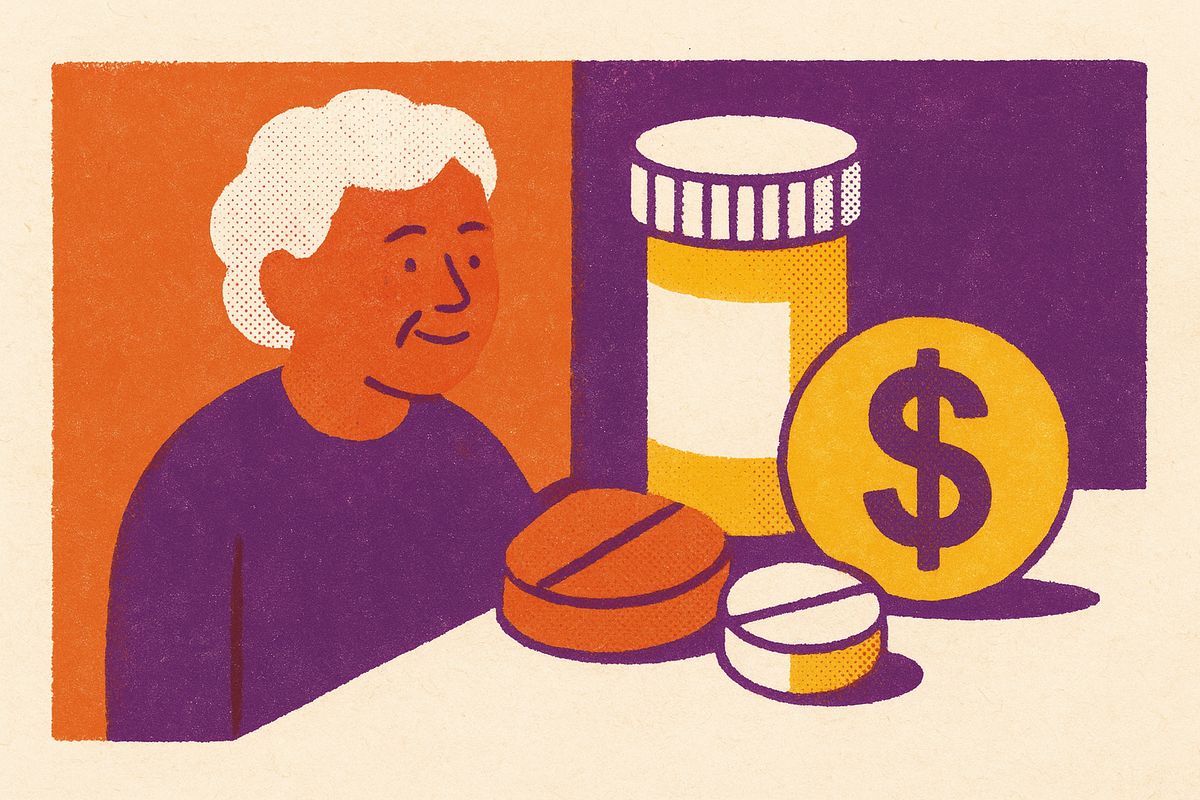
Ninety percent of older Americans want to remain in their own homes as they age, but one in four already has difficulty with everyday tasks like bathing and dressing. Only 34 percent of seniors surveyed by A Place for Mom in 2023 felt prepared to pay for senior living. These numbers point to the same underlying problem: preferences exist, but the plans to honor them do not.
Here is where the framing of an early conversation actually matters, and where I've seen families get it wrong in a particular way. They approach it as a conversation about decline, about what happens when things go bad, about planning for a future the parent doesn't want to think about. That framing makes the parent feel like a problem being managed. The conversation is more accurately about making a parent's stated preferences, staying home, maintaining independence, directing their own care, actually achievable. Those are not the same discussion, and they do not feel the same to the person being asked.
How to Choose a Moment That Doesn't Feel Like an Ambush
Timing is close to determinative in whether the first conversation opens a channel or closes one.
Initiating the discussion immediately after a fall, a frightening medical result, or a recent conflict loads it with anxiety that makes productive exchange nearly impossible. High-stress moments trigger defensiveness. Formal settings do the same. Sitting a parent down at the kitchen table with a printed list of topics signals, immediately, that this is an intervention rather than a conversation.
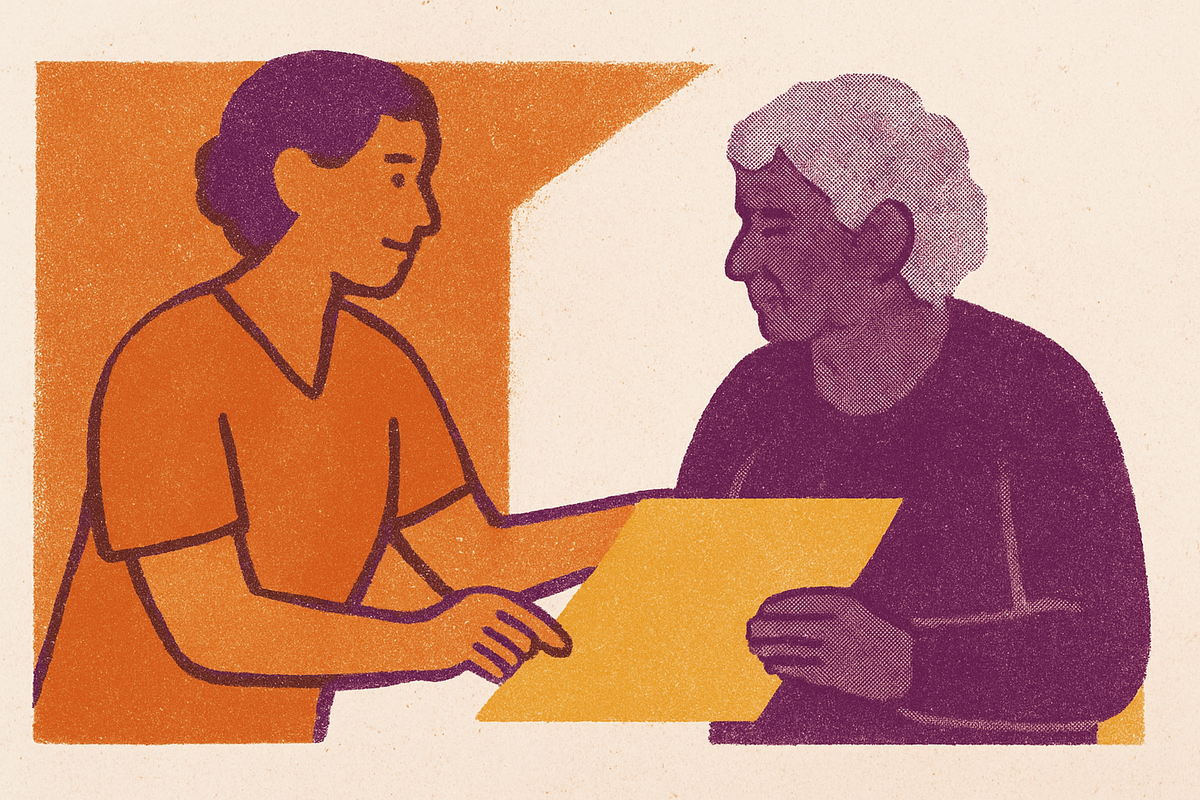
Dr. Arbaje's suggestion is worth taking seriously: bring the topic up casually. Mention a neighbor who recently moved to assisted living, or a news story about a living will dispute. Let the subject arise rather than convening around it. A walk, a shared meal, a car ride home from a family gathering: these are not trivial settings. They signal connection rather than assessment, and they lower the emotional temperature enough that a parent can actually hear what's being said without bracing against it.
Natural openings in daily life tend to outperform scheduled discussions by a wide margin. A parent mentioning an upcoming doctor's appointment, a report on the news about an elderly driver, a comment about a peer who is struggling: these are entry points that don't require engineering. The goal of the first conversation is not to resolve anything. It is narrower than that. It is simply to establish that this subject can be discussed at all, that the door is open, that nobody is going to panic or retreat if it comes up again.
Specific Language and Framing That Keeps a Parent Engaged Rather Than Defensive
The difference between "I'm worried about you" and "You need to stop driving" is the difference between expressing concern and issuing a directive. One invites a response; the other forecloses the conversation before it begins. "I" statements preserve the parent's agency in the exchange; "you" statements position the adult child as the authority, which is rarely how the parent experiences their own life, and which they will resist accordingly.
Open-ended questions should precede proposed solutions. Ask what matters most to the parent before naming what you've observed. Ask what they would want if they couldn't manage on their own before suggesting arrangements. As Dr. Arbaje notes, "The older person needs to feel they're in control, that they're making the decisions." That is not a therapeutic nicety. It is, practically speaking, the condition under which useful information actually gets shared, because people do not tell you what they want when they believe the decision has already been made without them.
Offering to do things with a parent rather than for them carries the same logic. Replacing how someone manages their life communicates that you've already decided they can't manage it. Doing things alongside them honors their existing patterns while building in the support they may need.
Third-party catalysts can reduce the personal charge considerably. A film that depicts end-of-life decisions realistically, or a news story about a family navigating care for an aging parent, can open discussion without any individual in the room feeling targeted. "What would you do if you were in that situation?" is a different question than "What would you do if you got sick?" Hypothetical distance gives people room to think before the subject becomes personal.
What to avoid: leading with the problems you've observed, or with the solutions you've already decided on. Both signal that the conversation's outcome is predetermined. Most people, at any age, stop engaging the moment they sense that.
The Five Topics That Need to Surface Across Multiple Conversations
Amy McLoughlin identifies five areas that every family should eventually cover: legal documents, finances, health and safety, living arrangements, and end-of-life wishes. None of these can be fully addressed in a single conversation; all of them carry enough complexity to warrant sustained attention over time.
Legal Documents
Durable power of attorney, healthcare proxy, advance directive: these are the instruments that allow a parent's wishes to be executed when they can no longer execute them personally. Roughly 46 percent of older adults have completed an advance directive, meaning the majority have not. Waiting until a parent is hospitalized to establish power of attorney can delay or block timely care decisions entirely. The legal framework needs to be in place before it is needed, and the first conversation is the right moment to find out whether it is.
Finances
Only 34 percent of seniors surveyed by A Place for Mom in 2023 felt prepared to pay for senior living. Only 21 percent of adults 65 and older have long-term care insurance, according to a Pew Research Center survey of 8,750 adults conducted in September 2025. Among adults ages 50 to 80, 43 percent are not confident they could afford long-term care or in-home support if it became necessary.
Financial unpreparedness is not simply a matter of insufficient assets. Benefits programs, Medicare, Medicaid, caregiver compensation structures, are available to many families who are unaware they qualify. The financial conversation is a practical one. It should surface what's actually covered, what isn't, and what can still be done about the gap, before the gap becomes a crisis.
Health and Safety
Current diagnoses, medications, treating physicians, and emergency contacts are the minimum necessary information for any family entering or anticipating a caregiving role. Beyond clinical details, home safety is a concrete and often underaddressed issue. Only a small fraction of U.S. homes currently has the accessibility features needed for aging in place. The gap between where most older adults want to live and where they can safely live is narrowed only through deliberate planning, not through goodwill alone.
Living Arrangements
Seventy-five percent of older adults want to remain in their homes, per an AARP 2024 survey. But 44 percent believe a move is eventually inevitable. That space between preference and expectation is one of the most productive areas a family can explore together, because acknowledging the gap does not mean accelerating the move. It means the family has time to plan for both contingencies rather than being surprised by either.
End-of-Life Wishes
What kind of care would the parent want, under what conditions, and where? These are not questions families enjoy asking. They are questions that, left unasked, transfer enormous burden onto whoever is making decisions in the moment, often a family member who is exhausted, grieving, and operating without guidance. Of older adults who have engaged in advance care planning, only 10 to 20 percent have actually discussed their wishes with a clinician. Documentation is essential, but the conversation has to precede the document.
Why This Is a Series of Conversations, Not a Single One to Complete
A conversation that happens at 65 covers different ground than one that happens at 78, or after a diagnosis, or after a sibling's death changes how the parent thinks about their own mortality. Needs evolve. Circumstances shift. The value of these conversations is cumulative: each exchange adds information, builds the mutual trust that makes honest disclosure possible, and keeps the family's eventual decisions closer to what the parent actually wants.
Natural moments to return include a significant health event, a change in living situation, the death of a peer, a parent's retirement, or a caregiver's own life transition. These are not interruptions; they are organic checkpoints within an ongoing relationship.
There is another function that earlier, smaller conversations serve, one that is easy to undervalue. They reduce the emotional weight of later ones. The first conversation that ends without resolution is not a failure; it opens a channel. The second is easier because the channel exists. By the time the family faces a consequential decision, they are not beginning from silence, which is an entirely different position to be in.
For caregivers already deep in the role, the 25 percent who devote more than 40 hours a week and are having these conversations under maximum stress: the earlier conversation that didn't happen cannot be undone. But starting from wherever the family currently is still matters. I have seen families reach real clarity in the middle of a hospitalization, not because it was easy, but because someone finally asked and someone finally answered. The door opened today is worth more than the door that should have been opened three years ago.
What Families Should Do Immediately After the First Conversation
Write down what was shared. What the parent wants. Where the documents are. Who the key medical contacts are. Memory under stress is unreliable, and the period immediately following a first conversation, when recall is still fresh, is exactly when a written record is most achievable and most valuable.
Identify any legal gaps and move to address them before urgency sets in. Power of attorney and healthcare proxy, if not yet established, belong at the top of the list. These instruments cannot be created retroactively once capacity is lost; that window closes, sometimes very quickly.
Review the financial picture concretely. Medicare, Medicaid, and caregiver compensation programs are available to many families who have not investigated eligibility. Most families miss benefits not because they don't qualify but because the system is not legible to people navigating it for the first time, under pressure. The post-conversation period is the right time to find out what's available.
Set a time for the next conversation. Not as a scheduling formality, but as a signal that this is an ongoing relationship rather than a task being checked off. The cadence matters as much as the content, because continuity is what separates a productive series of exchanges from a single uncomfortable event that everyone quietly agrees not to revisit.
A conversation that ends without everything resolved is still a beginning. Most of them do.